

Mountain Rescue and Emergency Medicine Course
The Mountain Rescue and Emergency Medicine Course is an advanced training programme for healthcare professionals, mountain rescue personnel, mountain guides, and other professionals involved in, or interested in becoming involved in, mountain rescue operations in Arctic and alpine environments.
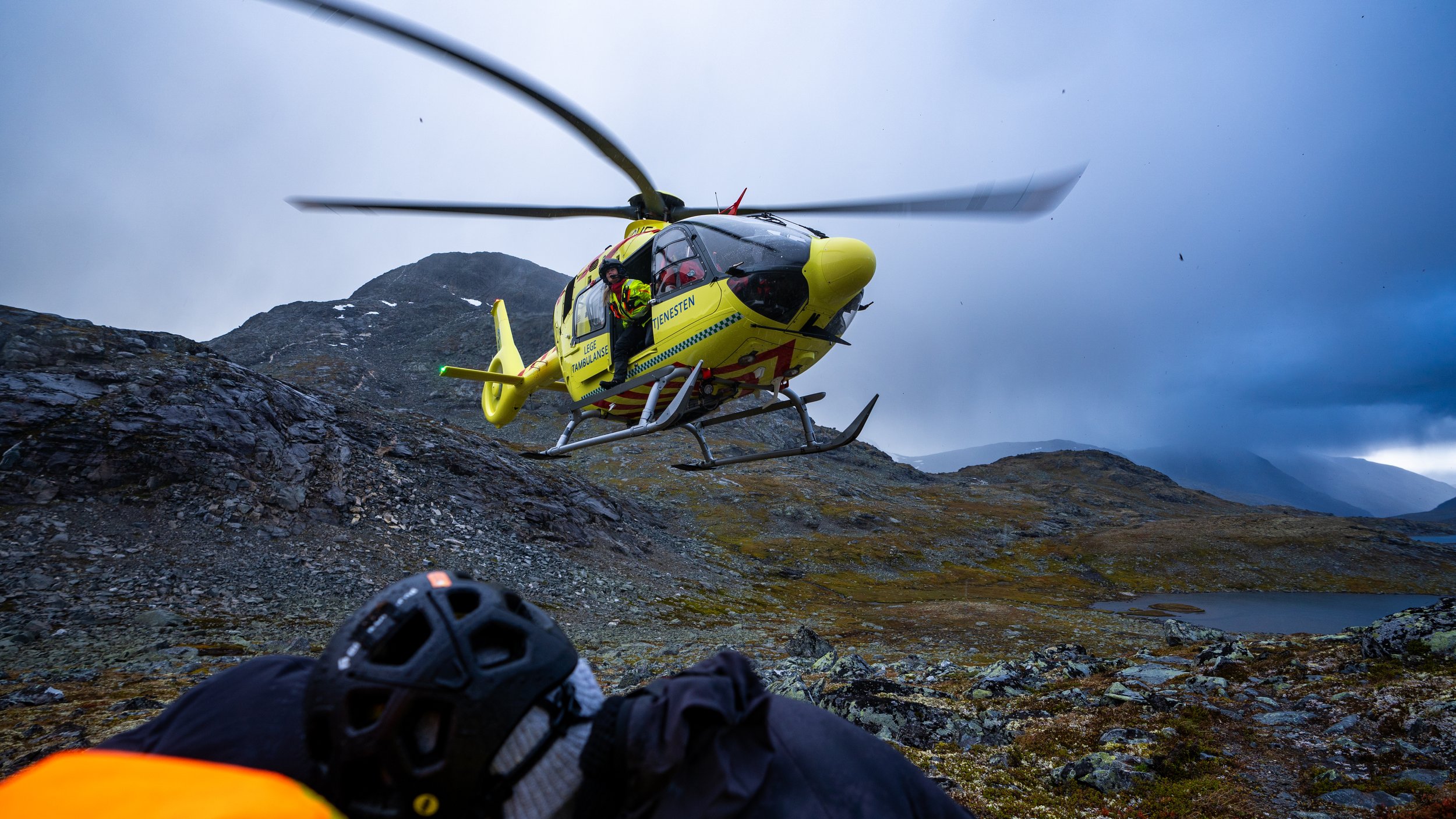
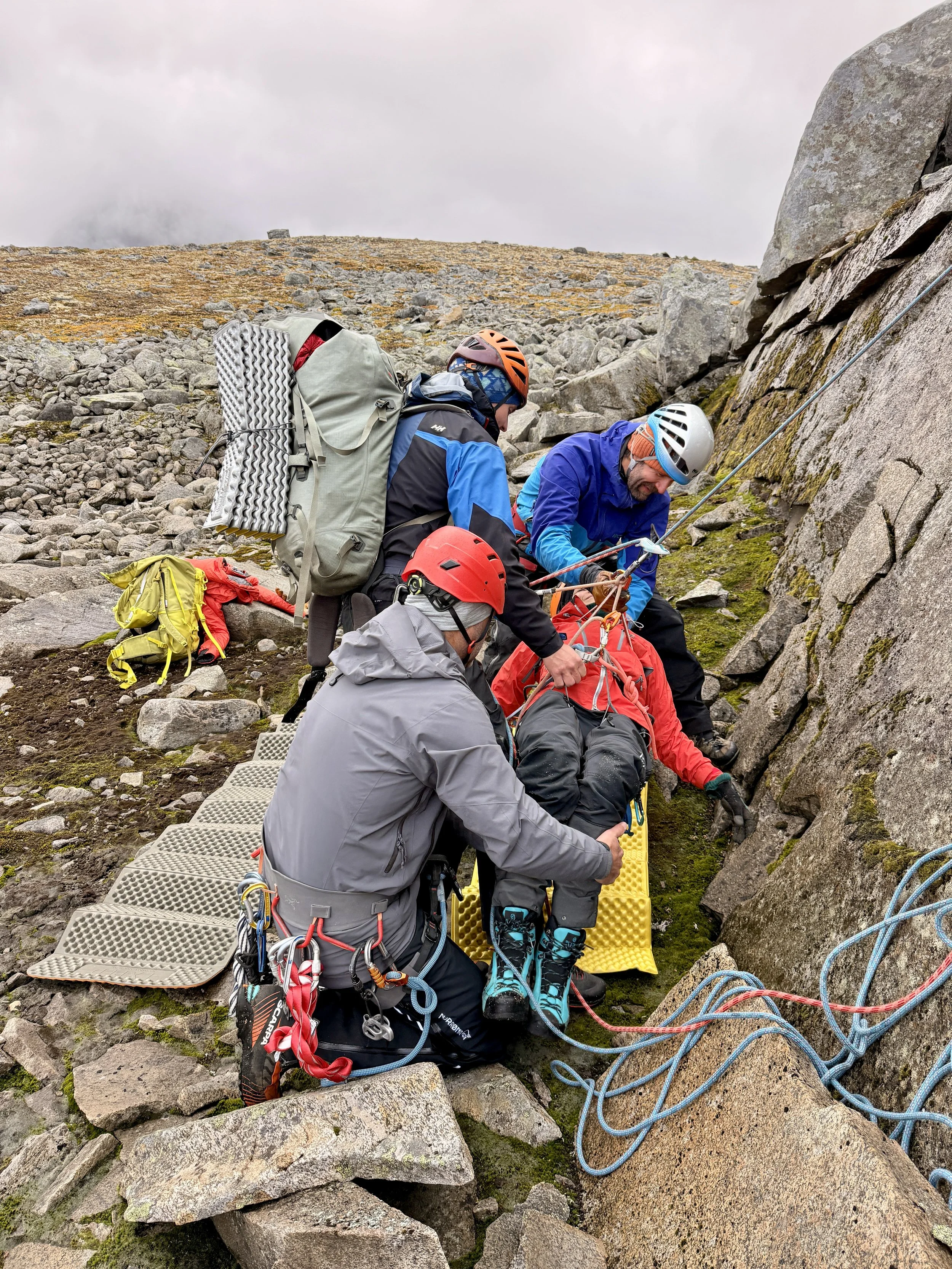
The programme integrates technical mountain rescue, avalanche rescue, helicopter operations, and mountain emergency medicine through evidence-based teaching, practical skills training, and realistic rescue scenarios.
The programme consists of complementary Winter and Summer Courses conducted in Norway's diverse mountain environments.
International Recognition and Qualifications
The course is officially endorsed by the International Climbing and Mountaineering Federation (UIAA), International Commission for Alpine Rescue (ICAR), and International Society for Mountain Medicine (ISMM) as a Terrestrial Mountain Rescue Specialty Course within the international Diploma in Mountain Medicine (DiMM) framework.
In accordance with the DiMM Regulations, healthcare professionals who successfully complete both the foundational Diploma in Mountain Medicine (DiMM) and the Terrestrial Mountain Rescue Specialty Course Module may be awarded the corresponding title of Mountain Emergency Physician or Mountain Emergency Paramedic, depending on their professional qualifications.

Course Overview
Mountain rescue personnel increasingly operate in demanding winter and alpine environments where technical rescue, avalanche rescue, helicopter operations, and emergency medicine must work together to provide safe and effective patient care. This requires professionals who have solid technical skills, sound medical knowledge, and the ability to make good decisions under challenging conditions.
The Mountain Rescue and Emergency Medicine Course has been developed to meet these challenges. It is an advanced training programme for healthcare professionals, mountain rescue personnel, mountain guides, and other professionals involved in rescue operations and casualty care in Arctic and alpine environments.
The programme integrates mountain rescue, mountain emergency medicine, glacier travel and rescue, avalanche rescue, water rescue, helicopter operations, and technical rope rescue into a single operational framework. It follows the learning objectives of the Diploma in Mountain Medicine (DiMM) Regulations for the Terrestrial Mountain Rescue Specialty Course Module and is based on current international guidelines, evidence-based practice, and extensive operational experience from helicopter emergency medical services (HEMS), organised mountain rescue, and mountain emergency medicine. Training is conducted in Norway’s diverse mountain terrain, providing realistic conditions for practical skills training and operational scenarios in both summer and winter environments.
A central aim of the course is to develop participants’ competence, confidence, and operational capacity to maintain their own safety and that of others during mountain rescue operations. This includes recognising hazards, assessing risks, and making sound decisions about how to manage them in challenging and dynamic environments. The primary focus is on developing solid technical knowledge and practical rescue skills to conduct safe and effective rescue operations across a wide range of terrain and environmental conditions. Alongside the technical rescue training, the course places strong emphasis on mountain emergency medicine, integrating relevant clinical assessments, emergency treatments, and patient management strategies based on current evidence and best practice.
Course Structure
The Mountain Rescue and Emergency Medicine Course consists of two complementary courses:
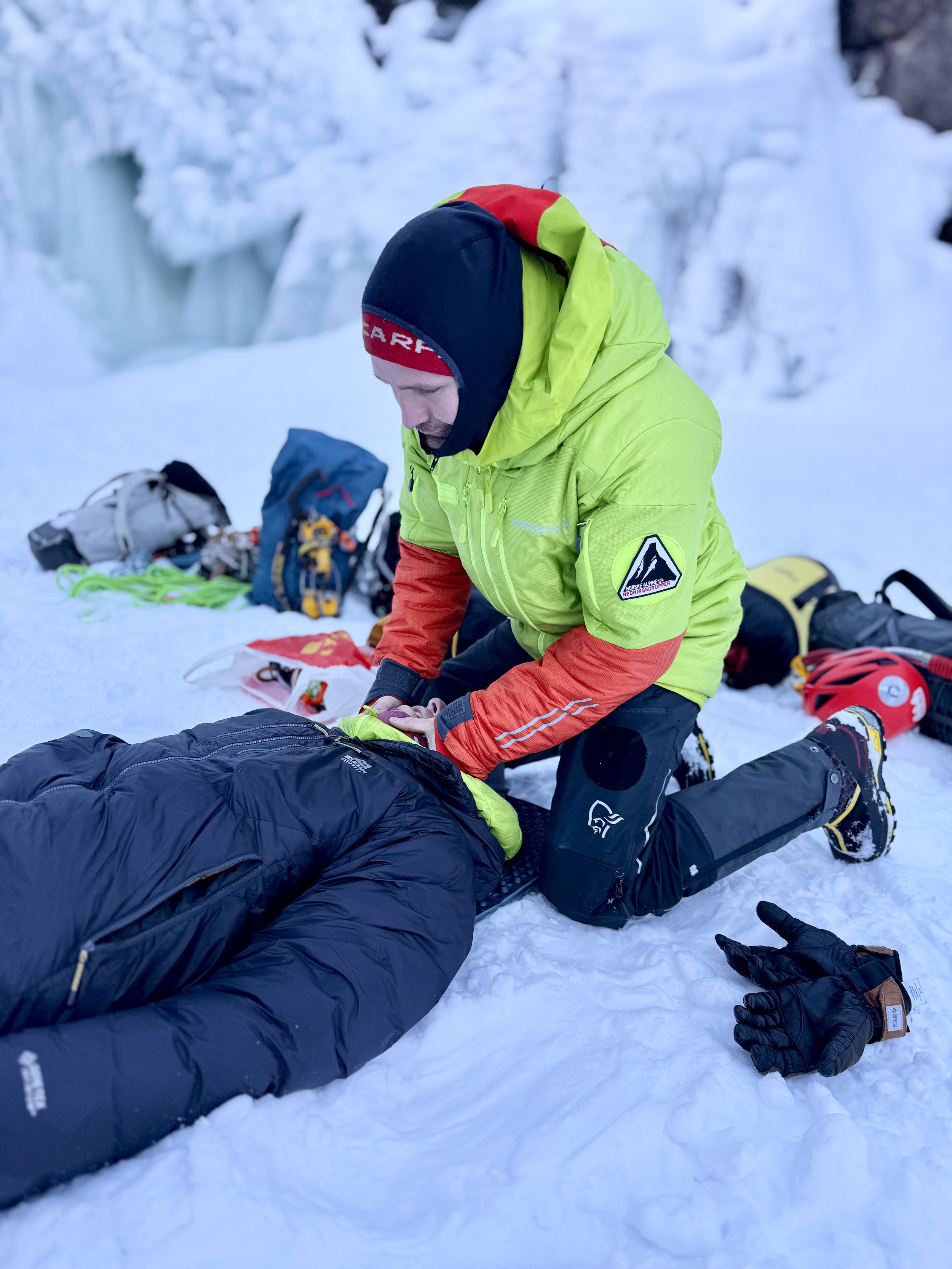
Winter Course and a Summer Course, both conducted in Norway.
Together, they are designed to fulfil the learning objectives and requirements of the
UIAA/ICAR/ISMM Terrestrial Mountain Rescue Specialty Course Module.
Both the Winter Course and Summer Course are planned for 2027. Further details and course registration information will be published on our website. Stay tuned for updates.
Winter Course

Summer Course
Our Approach to Learning
The course has a strong emphasis on learning through practice, reflection, and guidance, with teaching adapted to the participants’ backgrounds, experience, and skills. Evidence-based practice is a fundamental principle throughout the programme, informing both the theoretical teaching and practical training, and encouraging participants to critically evaluate and apply current knowledge in operational settings.
Short sessions of theory and instruction are integrated with practical skills training and case-based exercises. Case training is used both to reinforce previously learned skills and to introduce new learning objectives through realistic operational situations. Following each exercise, participants reflect on their performance and receive further guidance and instruction to support continued learning and development. Throughout the course, participants work in small groups, with a strong focus on cooperation, problem-solving, practical skills, and professional judgement.
Interested in participating or have questions about the programme? Feel free to contact us for more information.
DiMM Regulations
For further information about the Diploma in Mountain Medicine (DiMM) and the
Terrestrial Mountain Rescue Specialty Course, see the DiMM Regulations